
A Guide to Silica Dust in the Workplace
THE CONTRACTOR'S EASY GUIDE OF HOW TO BE COMPLIANT WITH SILICA DUST.
WHAT IS SILICA DUST & CRYSTALLINE SILICA?
Silica is Quartz, and is found naturally in almost all rock, sand, soil, brick and concrete products. Silica Dust is the collection of respirable particles that are released into the air when cutting, mixing or doing other work practices with quartz materials.
WHY SHOULD I CARE ABOUT SILICA?
Silica is an important topic in the construction industry, especially since the EU classed work that creates respirable crystalline silica dust as a cancer risk. It is important for you to protect your health and to know the rules. Employers must assess the risk, reduce exposure at the source with engineering controls such as on-tool dust extraction, inform and train workers, and arrange health surveillance, among other requirements.
What does all this mean to the average contractor? We’ve created this silica dust resource page for contractors and industry professionals to help answer that question.
WHAT KIND OF WORK CAUSE SILICA EXPOSURE?
Below are many common work practices used today in the construction industry that create silica exposure. Each of these work practices can potentially expose workers to respirable crystalline silica far above the EU limit.

CORING & GRINDING
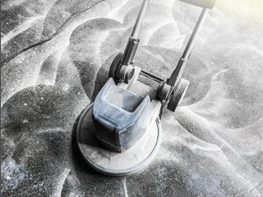
CONCRETE POLISHING
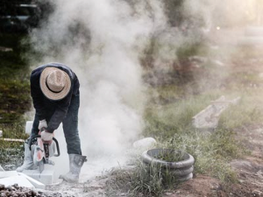
DRY CUTTING

DRY SWEEPING
HOW DOES SILICA AFFECT MY HEALTH?

WHAT IS SILICOSIS?
Silicosis: A non-reversible lung disease. Acute silicosis: cough, weight loss, and fatigue presents in a few weeks or years of exposure to inhaled silica. Chronic Silicosis: appears 10 to 30 years after exposure, affects upper lungs and causes extensive scarring. Accelerated Silicosis: occurs within10 years of high-level exposure.

WHAT IS COPD?
COPD causes obstructed airflow from the lungs. Airways become thick and inflamed and air sacs lose their elastic quality. Too much mucus is made and blocks airways.

SILICA DUST EXPOSURE SYMPTOMS
• Shortness of breath
• Loss of appetite
• Chest pains
• Fatigue
• Severe cough
• Cyanosis (bluish skin)
WHAT DOES THE EU SAY ABOUT SILICA?
EU SILICA EXPOSURE LIMIT
The binding occupational exposure limit is the legal limit set by the EU for worker exposure to respirable crystalline silica, in Directive (EU) 2017/2398. In simple terms, how much dust a worker is legally allowed to breathe over an eight hour period. Some EU countries set a lower national limit, so always check the limit in your country.
0.1 mg SiO2/m3 (100 µg/m3)
Exposure is determined by three factors: Air, Dust and Time. To understand the limit, we need a better grasp of each factor.
AIR X DUST X TIME = EXPOSURE LEVEL

AIR
How much air does a person breathe? The answer depends on a number of factors.
• Height
• Weight
• Fitness level
• Activity
The average adult male working at a moderate activity level inhales 16.8 cubic meters of air over the course of an 8-hour work day.
DUST
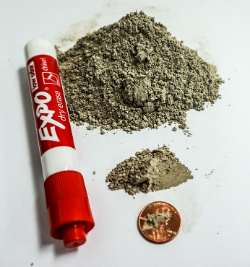
The amount of silica dust in the air one breathes affects your exposure level. This depends on a number of factors: What type of material is being cut? How much material is being removed in a cut? What is the silica content of that material? Air monitoring will give real time exposure level results for specific work practices.

TIME
Time is the third factor. Since a worker breathes 16.8 m3 of air in eight hours, and the EU limit is 100 µg/m3, the total maximum exposure for eight hours is 1,680 µg (16.8 m3 x 100 µg).
EU RULES AND REQUIREMENTS FOR SILICA DUST
HOW MUCH SILICA DUST IS HARMFUL?
If you can see the dust around you - its too much dust., Using tools like air monitors or resources like Time Weighted Average and the Hierarchy of Controls, can help you determine your real exposure levels.
TIME WEIGHTED AVERAGE FOR MONITORING EXPOSURE
Time Weighted Average (TWA) is used to calculate a worker’s daily exposure to a hazardous substance averaged to an 8-hour workday, taking into account the average levels of the substance or agent and the time spent in the area. While some workers may engage in a single work practice throughout a workday, others may engage in multiple work practices. As you know, each work practice varies from high exposure to zero exposure to silica. The EU limit is also averaged over an 8-hour day. This averaging allows us to vary the activities a person performs to help keep them in a safe air environment during their workday.


HIERARCHY OF CONTROLS FOR SILICA DUST
A system used to minimize or eliminate exposure to hazards. It is a widely accepted system promoted by numerous safety organizations. The EU has set the exposure limit to 0.1 milligrams (100 micrograms) of respirable crystalline silica per cubic meter of air, or 0.1 mg SiO2/m³, over an eight-hour time weighted average (TWA).
HOW TO PROTECT YOURSELF FROM SILICA DUST
The fact is a majority of those affected by the silica dust problem know very little about it, or even that there is a problem. That’s why the solution must start with education. Use this page and the resources linked below to educate yourself and your workers about silica.
Know the Hazard - Understand the hazard and risks associated with silica exposure.Know the Standards - Understand the EU limit, your national limit, and what they mean to you, your business and your workers.Know Your Exposure- Understand how to use air monitoring to measure silica exposure levels andunderstand the results. Know Your Options - Understand your options, including tools, work practices and educational resources for controlling silica exposure on your job sites.
Our goal is to see the construction industry 100% dust free. We aim to achieve that goal through education and the development of professional tools and technology to eliminate silica dust from job sites.
Know the standard. Know your exposure. Know your options. And take action

WHY DO WE CARE?
Silica dust is a major problem affecting the construction industry. One thing we know is it won’t go away by ignoring it
We were in your shoes. We have lived with silica before there were options to eliminate it. Now there are ways to protect your health, and the health of your employees